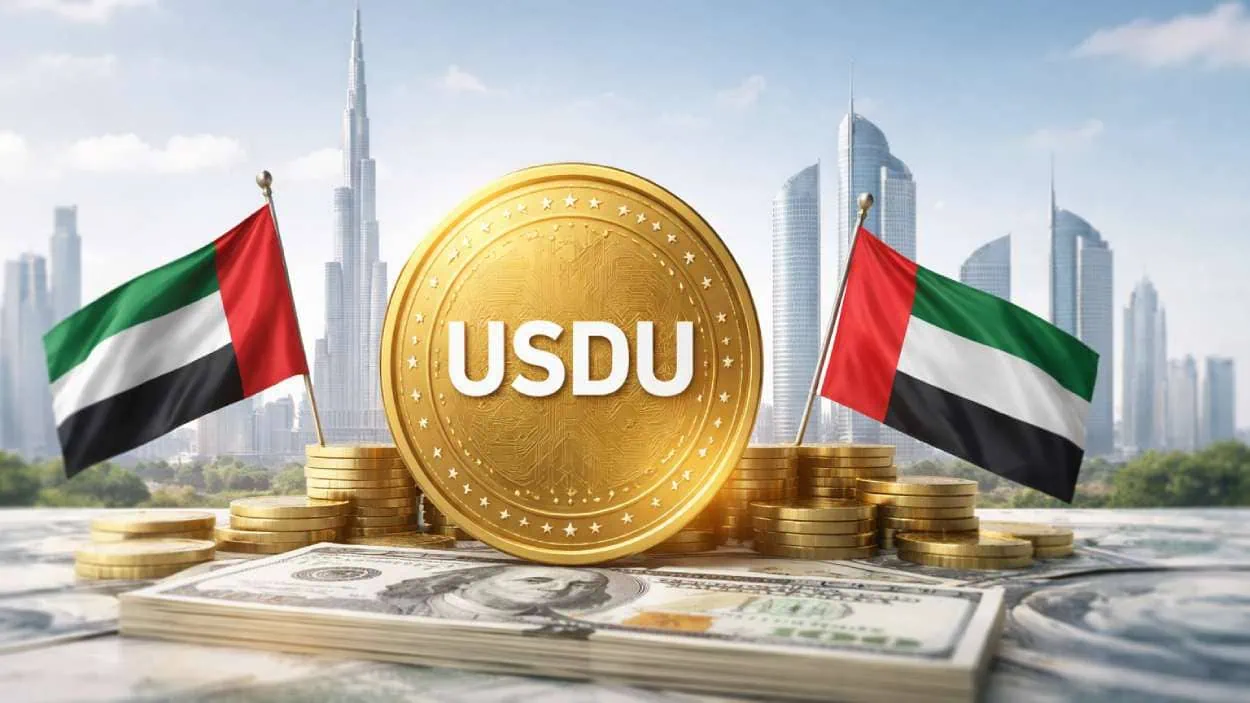







Universal Digital has launched USDU, the first USD-backed stablecoin officially approved by the Central Bank of the United Arab Emirates (CBUAE), marking a major shift in the region’s embrace of regulated digital finance.
Key Takeaways
- USDU is the first Central Bank-registered stablecoin in the UAE, approved under the Payment Token Services Regulation (PTSR).
- Reserves backing USDU are held 1:1 in safeguarded accounts at Emirates NBD and Mashreq, with Mbank as a strategic partner.
- Issued by Universal Digital, a firm licensed by Abu Dhabi Global Market (ADGM), the token integrates traditional banking with blockchain technology.
- The launch signals the UAE’s commitment to becoming a global hub for compliant digital asset innovation.
What Happened?
Universal Digital International has become the first Foreign Payment Token Issuer registered under the UAE’s PTSR framework. With the launch of USDU, the country has introduced a compliant, USD-pegged digital settlement option for its financial ecosystem. This milestone reflects the UAE’s broader digital finance strategy and positions the nation as a leader in merging regulation with innovation.
Universal launches USDU – the UAE’s first Central Bank-registered USD stablecoin.
— Universal (@Universal_USDU) January 29, 2026
Issued by an FSRA-regulated entity in @ADGlobalMarket, USDU is supported by banking partners @EmiratesNBD_AE , @MashreqTweets, and @almaryahbank with global distribution via @aquanow, and alignment… pic.twitter.com/LisFKmBMxd
UAE’s First Regulated USD Stablecoin Goes Live
USDU is the first stablecoin officially registered with the CBUAE, created under a legal framework designed to ensure full transparency, security, and compliance. The coin is issued by Universal Digital, which is regulated by the Financial Services Regulatory Authority (FSRA) in Abu Dhabi Global Market (ADGM).
- USDU is fully backed 1:1 by US dollars held in domestic accounts at Emirates NBD and Mashreq.
- Mbank acts as a strategic banking partner.
- Monthly reserve attestations are conducted by a global accounting firm.
This structure distinguishes USDU from other global stablecoins like USDC and USDT, whose reserves are spread across jurisdictions and may include non-cash assets.

Built on Strong Institutional Partnerships
The success of USDU is underpinned by partnerships with top UAE banks and global infrastructure providers:
- Emirates NBD, Mashreq, and Mbank serve as banking partners ensuring custodial security.
- Aquanow, regulated by Dubai’s Virtual Assets Regulatory Authority (VARA), will facilitate market access and integration into the digital-asset ecosystem.
- A collaboration with AECoin, the first AED stablecoin in the UAE, is underway to allow seamless conversion between USDU and AED for domestic payments.
Bank leaders from these institutions have voiced strong support, citing the importance of secure, compliant digital payment solutions.
Regulatory Milestone Under PTSR
The Payment Token Services Regulation (PTSR) was introduced by the CBUAE as part of its Financial Infrastructure Transformation (FIT) Programme. It mandates that only fiat or Registered Foreign Payment Tokens can be used for digital asset transactions in the UAE.
By becoming the first and only token currently registered under the PTSR, USDU unlocks compliant digital-asset settlement for:
- Cross-border trade
- Institutional finance
- Decentralized applications
- Financial inclusion for expatriates through cost-effective remittances
A New Model for Global Stablecoins
USDU sets a precedent for regulated digital currencies that prioritize domestic oversight, onshore reserves, and bank integration. Compared to global stablecoins:
- It offers greater regulatory transparency.
- Reserves are fully accessible to UAE regulators.
- Supports near-instant settlement and reduces forex risk.
This framework could inspire other GCC countries to adopt similar models, promoting regional digital finance harmonization.
Road Ahead: Integration and Expansion
The next phase involves integrating USDU with the UAE Instant Payment Platform (IPP) and expanding its role in domestic and international finance. Universal is also building a broader ecosystem around USDU by collaborating with banks, fintechs, and market operators to enable:
- Tokenized trading venues
- Digital settlements across borders
- Future multi-currency stablecoins within regulated sandboxes
CoinLaw’s Takeaway
I’ve followed crypto regulations evolve for years, and this move by the UAE is a game-changer. By building USDU with actual bank partnerships and government approval, Universal has created more than just another stablecoin. It’s a blueprint for how traditional finance can coexist with blockchain in a way that is safe, compliant, and scalable. In my experience, what often holds digital assets back is lack of trust. USDU directly tackles that. It’s the clearest sign yet that the UAE is serious about leading the future of finance.